

When Should You Replace Your C Arms?
Whenever the customer buys a refurbished C-arm, they first ask which year it was made. It is a very pertinent question and is asked for any refurbished or used item purchased by a customer. However, in the case of used C-arms, the question is vital because there are many things that one must consider when replacing a C-Arm and deploying a new one.
In this article, we will look into when one should replace a C-Arm and how age matters in C-Arm.
What Is A C-Arm?
Before discussing replacing the C-Arms and how age matters, let's start with the basics. What is a C-Arm, and what is it used for?
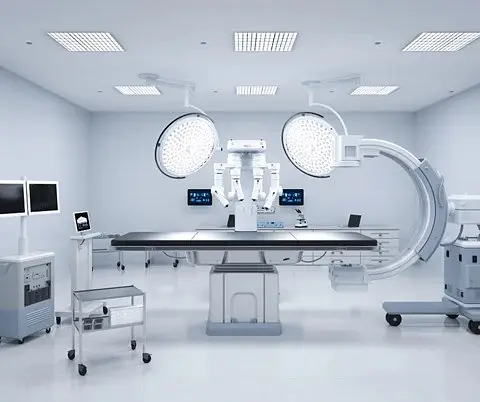
C-Arm is a machine that is based on X-ray technology. This advanced medical device is used primarily for its fluoroscopy abilities along with the radiography technology it provides.
The reason the device is called C-Arm is because of the C-shaped arm it has. One end of the device is connected to an X-ray source, while the other has a detector.
C-Arms are typically used in gastroenterology, urology, and orthopaedic surgeries.
Apart from these, the machine is used in emergency cardiac and angiography procedures, pain management, and therapeutic studies like needle placements and stents.
The fluoroscopy capabilities offer the specialist to get high-resolution X-ray images in real-time, thus enabling the surgeon to conduct a correct procedure.
Furthermore, since C-Arm is a mobile device, it offers flexibility in taking images of the patient's entire body from different angles, which is quite beneficial for the surgeon. For the patient, it means they will have a better outcome.
When Should You Replace Your C-Arm?
According to experts, the C-Arm should be replaced every five years.
The reason five years is taken as the benchmark is that the life expectancy of an X-ray tube which forms the basis of a C-Arm is that. Additionally, the depreciation of capital equipment is considered to be five years.
However, the five years mark is not carved in stone. Instead, it is used as a reference point. It is vital that the equipment is not outdated and does not capture a poor image.
There is no point in having a C-Arm in a facility that fails to perform as per its standards and cannot help the surgeons perform the procedures with precision and quickly.
Hence other factors need to be considered when considering the machine's age and changing the C-Arm.
How Age Matters In C-Arm?
When you are planning to buy a C-Arm or replace the existing one with a refurbished or used item, you need to consider the age of the arm. Also, even if you have been using it and haven't replaced the C-Arm for a while, consider doing it based on the following three factors.
1) Software
When you have a C-Arm of the latest software version, it is more stable and can indicate the requirement for a hardware update. If your C-Arm cannot process the newest software, you might have to consider replacing it.
If you are wondering why the age of the software is more important than the age of the system, the answer is the newer version of C-Arms now has OEM software installed from the factory.
Even the recent DOM versions do not translate into the latest software used in the field. The installed version and its capacity to work while keeping up with the latest technological enhancement depends on the frequency with which the software is upgraded.
So, check the C-Arm that can have the higher version software even if the made is older than some of the latest manufactured ones.
The other aspect that needs to be checked when replacing the C-Arm is whether it has onboard DICOM. It is essential to have DICOM capability because if it is not built into the equipment, you have to purchase it as an accessory device.
Without the DICOM, you cannot send images to the PACS server. DICOM is vital in the equipment because it is the most direct way for the PACS server to get the images.
Whether you want to buy an in-built DICOM equipment that is a couple of years older than a C-Arm that does not have the feature has to be decided by you. But it is a vital aspect to consider when changing the C-Arm.
2. The Components
Some of the expensive parts of the C-Arm are the X-ray tube, Image Intensifier (II), and CCD camera. Going by the DOM can be quite misleading when thinking of changing the C-Arm.
A C-Arm that had been used in a low-traffic facility may have more life left in the components than a machine of later DOM but used extensively in a service.
It is better to ask the DOM of each component and the type of facility it has been used in if you are purchasing a used or refurbished machine.
3) The Overall Condition
Irrespective of the DOM, if there is any part of the C-Arm that is wearing needs to be replaced immediately.
A facility with high traffic often faces wear and tear on the components like brake pads, casters, cable castings, and locks. The frequent use also impacts the internal components like collimators and voltage tanks.
Proper notice must be taken when replacing a C-Arm, even with a refurbished one. It is quite possible that the equipment can operate with the newer components.
Final Word
The age of the equipment is essential as the information can help manage the C-Arm and how it performs.
However, going by the DOM and the five-year mark is not the ideal indicator for changing the C-Arm and purchasing a new one. You must look into the other components of the C-Arm before you change it or buy a refurbished or used one.


