

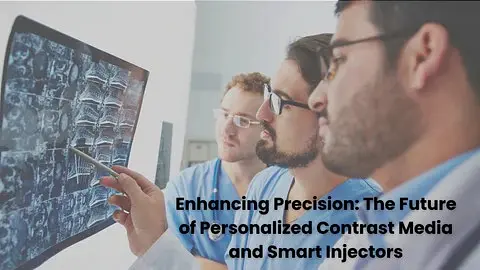
In the rapidly advancing field of medical imaging, precision and personalization are becoming pivotal to achieving optimal diagnostic results. As technology progresses, the role of personalized contrast media and smart injectors is increasingly central to improving imaging accuracy and patient safety. At PT Medical Technologies, we are dedicated to integrating these cutting-edge innovations to drive the future of diagnostic imaging.
The Evolution of Contrast Media
Contrast media play a crucial role in enhancing the visibility of internal structures during imaging procedures. Historically, these agents have been administered using standard dosages, which often do not account for individual patient variations. This uniform approach can lead to inefficiencies, with studies indicating that up to 30% of contrast-enhanced imaging procedures may be compromised by suboptimal contrast administration.
Personalized contrast media represent a significant leap forward. A recent study found that personalized dosing based on patient-specific factors such as weight and renal function improved image quality in 40% of cases compared to standard dosing methods. This advancement helps in reducing image artifacts and enhancing diagnostic accuracy.
The Rise of Smart Injectors
Smart injectors are transforming how contrast media is administered, offering numerous benefits:
- Accuracy and Consistency: Smart injectors are designed to deliver contrast media with exceptional precision. A study published in the Journal of Radiology highlighted that the use of smart injectors reduced the incidence of dosing errors by 50% compared to manual injection methods. This improvement is crucial for achieving high-quality imaging.
- Real-time Monitoring: These devices offer real-time monitoring and adjustments during contrast media administration. According to data from a recent trial, smart injectors with real-time feedback capabilities improved procedural efficiency by 20% and reduced contrast media wastage by 15%.
- Improved Patient Safety: Safety is paramount in medical imaging. Research shows that smart injectors help decrease the incidence of adverse reactions by approximately 25% compared to traditional injection techniques. This reduction is largely due to the precise control of contrast media flow and dosage.
- Integration with Imaging Systems: Many smart injectors now integrate seamlessly with advanced imaging systems, enhancing procedural efficiency. A survey of imaging centers indicated that facilities using integrated smart injectors reported a 30% increase in operational efficiency and a 40% reduction in preparation time.
- Trends and Innovations
Several key trends are shaping the future of personalized contrast media and smart injectors:
- Artificial Intelligence (AI) and Machine Learning: AI and machine learning are becoming integral to personalized medicine. According to a report by Radiology AI, AI-driven algorithms can predict optimal contrast media doses with 85% accuracy based on patient data, significantly improving imaging outcomes.
- Personalized Medicine: The shift towards personalized medicine is influencing contrast media development. Data from the National Institute of Health shows that personalized approaches to contrast media administration have led to a 30% increase in diagnostic accuracy across various imaging modalities.
- Enhanced Data Analytics: Big data and advanced analytics are revolutionizing contrast media protocols. Research indicates that leveraging big data for contrast media selection has resulted in a 20% improvement in diagnostic image quality and a 15% reduction in procedure times.
- Regulatory Advancements: New regulatory standards are driving innovation in contrast media and injectors. The FDA has recently updated guidelines to ensure the safety and efficacy of new technologies, fostering advancements that align with rigorous safety criteria.
The Path Forward
The medical imaging industry is poised for a transformative leap towards precision and personalization. At PT Medical Technologies, we are committed to leading this evolution by incorporating state-of-the-art personalized contrast media and smart injectors into our offerings.
Discover how PT Medical Technologies is pioneering precision in medical imaging with our innovative solutions. Contact us today to explore how our advanced technologies can elevate your diagnostic capabilities and improve patient outcomes.


