

Medical devices that save lives.
What does intubation do to your body?
When does someone need intubation?
Did you know there are more than 5 types of intubations?
We answer all these questions about this super delicate and live saving technique.
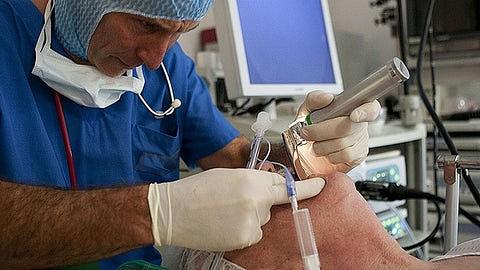
Intubation is the process to insert an endotracheal tube or ET tube through the patient’s nose or mouth into the trachea or windpipe. This is a flexible plastic tube that helps a patient breathe. The ET tube is connected to a breathing machine or ventilator that supplies oxygen to the lungs. An endotracheal tube is placed during serious illness or surgery. Let’s take a look at the uses and models of intubation.
There might be one or two channels known as lumen, in an ET tube. A double lumen ET tube is used to separately ventilate each lung. This happens in case of lung or other chest surgeries.
Let’s know more about it.
Uses of ET Intubation
Endotracheal intubation is done to:
- Keep the airway open to give oxygen, medicine, or anesthesia.
- Support breathing in certain illnesses, such as pneumonia, emphysema, heart failure, collapsed lung, or severe trauma.
- It is necessary to sedate and "rest" someone who is very ill.
- Remove blockages from the airway.
- Allow the provider to get a better view of the upper airway.
- Protect the airway and lungs in people who are unable to protect their airway and are at risk of breathing in fluid (aspiration). Such patients include those who have strokes, overdoses, or massive bleeding from the esophagus or stomach.
More About ET Tubes
Materials: These are made from a number of different materials, such as polyvinyl chloride (PVC), rubber, or silicone.Inform your doctor if you have a latex allergy, just in case a latex tube is used (though, it is not used commonly).
Sizes: Endotracheal tubes come in a number of different sizes ranging from 2.0 to 10.5 millimeters (mm) in diameter. In most cases, the largest tubes are used for men whereas the smallest ones are meant for premature infants.
Determining factors: A patient's age and body weight are the determining factors.
Types of ET Intubation
- Endoctracheal intubation: Inserting a tube through the nose or mouth into the trachea for maintenance of the airway during anesthesia is ET Intubation. It is also done to maintain an imperiled airway. This is a relatively temporary procedure and depends on the intubation purpose and the condition of the patient.
- Nasogastric intubation: Inserting a tube through the nose into the stomach to relieve the stomach’s excess air. It is also done to give nutrition or medications to the patients.
- Nasotracheal intubation (Blind): Blind intubation is used only if there are indications of the larynx not being visualized. In this model, atube is inserted through the nose into the trachea to view the glottic opening. It is useful when a patient has cervical spinal trauma and/or clenched teeth.
- These indications include intraoral operative procedures when the ET tube could be displaced or obscure the operative site. It can also be performed with direct visualization with a laryngoscope
- Orotracheal intubation: It involves the insertion of an endotracheal tube through the mouth and into the trachea.
- Fiberoptic intubation(awake): In this model, a fiberoptic scope is used having an eyepiece to see the larynx and a handle to control the tip. Usually 2 .5 - 3 feet long, the tube is inserted in the patient's throat and guided to the larynx and glottic opening. This procedure is used when patients can’t flex and extend their head for any reason. Usually the patients are sedated and made comfortable, at times, put to sleep.
- Tracheostomy intubation: Also performed as an urgent, life-saving procedure, it involves incising the skin over the trachea to create an airway and placing a tube. For the best results, it is done over a previously placed endotracheal tube in an operating room.
- Speaking tracheostomy tubes: The model includesespeciallydesigned tracheostomy tubes that facilitate the patient to speak. It is made possible by enabling air to enter the larynx without compromising the patient's ventilation. The tubes keep the air required to ventilate the lungs separate from the air supply needed for speech.
Two design types are used to allow independent voice control these days. The types are -
- Electro-mechanical solenoid: For controlled flow from a compressed air source
- Air compressor: For regulated air supply to the tracheostomy tube


